The ABCs of bedding
Wool Comforters Explained: Fill, Breathability, and Care
Wool brings a quietly distinctive character to the bed: insulating warmth, a natural ability to take up moisture, and a feel shaped as much by construction as by fiber. Understanding what sits inside a comforter—and how that fill is held in place—can make the difference between a layer that suits your sleep and one that never quite feels right.
A comforter is often chosen by a single shorthand: light, medium, or warm. Wool asks for a little more curiosity. Its performance depends on the wool itself, the amount and arrangement of fill, the fabric around it, and the way the layers are stitched together. A lofty, lofty-feeling comforter may behave quite differently from a compact one, even when both are described as wool-filled.
That is why comparing wool comforters is less about finding a universal “best” and more about reading the details. Fiber composition, fill weight, construction, care instructions, and the temperature of your room all contribute to the experience. A considered choice begins with the basics: what wool can do, what it cannot promise, and which product details are worth checking before you settle in.
What makes wool a distinctive comforter fill?
Wool fibers have a naturally crimped structure. In a textile, that structure can help create small pockets of air, contributing to insulation. Wool is also hygroscopic: it can absorb moisture vapor from its surroundings. In practical bedding terms, those properties help explain why wool is often valued for warmth that does not necessarily feel as dense or sealed-in as a heavy, tightly packed layer.
These are material characteristics, not guarantees of a particular night’s sleep. A comforter’s warmth depends on its fill quantity, loft, shell fabric, quilting, and the other layers on the bed. Personal factors matter, too: room temperature, sleepwear, mattress materials, and whether you tend to feel warm or cool can all change how a comforter feels. Wool may suit someone seeking a breathable-feeling layer, but no fiber can regulate every sleeper’s temperature on its own.
Moisture management is another part of wool’s appeal. The fiber can take up water vapor without immediately feeling wet, though the result depends on the product and the surrounding conditions. This should not be confused with waterproofing, nor does it mean a wool comforter can be neglected if it becomes damp. Airing and appropriate care remain important.
Start with the fill label
The word “wool” describes a broad family of fibers rather than one identical material. A label may identify sheep’s wool, merino wool, or a blend, and those distinctions can affect feel, sourcing, and care. If the comforter contains more than one fiber, the percentage of each matters. A wool-and-synthetic blend, for instance, is not the same thing as a comforter filled entirely with wool.
Look for a clear description of fill composition. “Wool fill” is a useful starting point, but a detailed label should ideally tell you what kind of wool is used and whether other fibers are present. The shell—the fabric enclosing the fill—deserves equal attention. Cotton is a common shell material; other fabrics may have a different hand, airflow, or maintenance profile. Read the complete materials list rather than assuming the outer fabric matches the fill.
When the source or certification is important to you, check what the claim actually covers. A certification may apply to the fiber, the finished textile, or a particular stage of production. The name of a fiber alone does not establish the origin, farming practices, or processing standards. Transparent product information is more useful than broad language that sounds reassuring but leaves the specifics unclear.
Fill weight, loft, and warmth
Fill weight describes how much filling is used, often expressed in grams or ounces for the full comforter or by area. A larger amount of wool may contribute to a warmer, heavier layer, but the number does not tell the whole story. Wool type, fiber preparation, fill distribution, quilting, and shell construction influence how that weight translates into loft and feel.
Loft is the visible and tactile fullness of a comforter. A lofty design can feel enveloping, while a flatter construction may feel more restrained and easier to layer beneath a duvet cover. Neither is automatically superior. If you like a bed that feels plush, construction and fill volume may be central to your decision. If you prefer a streamlined profile or often add blankets, a lighter or less lofty option may be more comfortable.
Warmth labels such as “lightweight,” “all-season,” or “winter” are useful only when you understand how the maker defines them. There is no single universal scale that makes every brand’s seasonal descriptions directly comparable. Where available, look for fill weight, product dimensions, and specific warmth guidance. If those details are absent, consider asking the manufacturer how the comforter is intended to be used and whether its warmth description reflects a particular climate or sleep setup.
Also remember that a comforter is part of a system. A wool-filled layer over a warm mattress pad, flannel sheets, and a duvet cover can feel substantially warmer than the same comforter over crisp cotton sheets in a cool room. Before buying a heavier fill, take stock of what is already on the bed. Thoughtful layering gives you more flexibility across changing seasons.
Construction: how the fill stays in place
Wool fill needs to be distributed and contained. Stitching patterns, internal compartments, and the shape of the comforter affect how evenly it sits over the bed. Quilted or channel constructions create divisions that help limit movement; the exact design varies, and the details should be described by the maker. Check whether the seams are intended to keep fill in place and whether the comforter can be rotated to spread wear over time.
The outer shell also influences the tactile impression. A tightly woven shell can feel smooth and structured; a softer or more relaxed fabric may have a different drape. If you are sensitive to texture, consider whether you plan to use a duvet cover. A cover adds another layer between you and the comforter, changes the hand of the bed, and can make laundering simpler, but it can also alter the overall feel and weight.
Dimensions are easy to overlook. Compare the comforter’s measurements with your mattress and the amount of side drop you prefer. A comforter that barely covers the mattress edges may shift during the night, while a generously sized one can add a more generous, layered appearance. A duvet cover should be sized to suit the comforter; mismatched dimensions can leave the fill bunching or the cover hanging slack.
Breathability without overpromising
“Breathable” is a description of how readily air and moisture vapor can move through a textile system, not a promise that a sleeper will never feel warm. The fill, shell, duvet cover, sheets, and room environment all play a part. Wool’s moisture-handling qualities may be appealing to people who dislike the clammy sensation they associate with some bedding, but individual experience varies.
If you wake warm, consider the whole bed before changing only the comforter. A dense mattress protector, synthetic cover, heavy sleepwear, or warm room can contribute to heat buildup. You might try a lighter cover, fewer layers, or a cooler room before deciding that the fill itself is unsuitable. Conversely, if you routinely feel cold, a well-matched wool comforter may be one useful part of a warmer setup.
Wool is not a substitute for medical guidance about night sweats, temperature regulation, or persistent sleep disruption. Bedding can improve comfort, but it cannot diagnose or treat the cause of ongoing symptoms. If a sleep or health concern is persistent, speak with a qualified health professional.
Wool comforter, wool blanket, or wool duvet?
The terms can be used differently by brands and regions, so product descriptions matter more than the name alone. A comforter is generally a filled bed covering designed to provide warmth. A blanket is usually a single layer of woven or knitted fabric, although products may vary. A duvet often refers to a filled insert used inside a removable cover, but terminology is not perfectly consistent across markets.
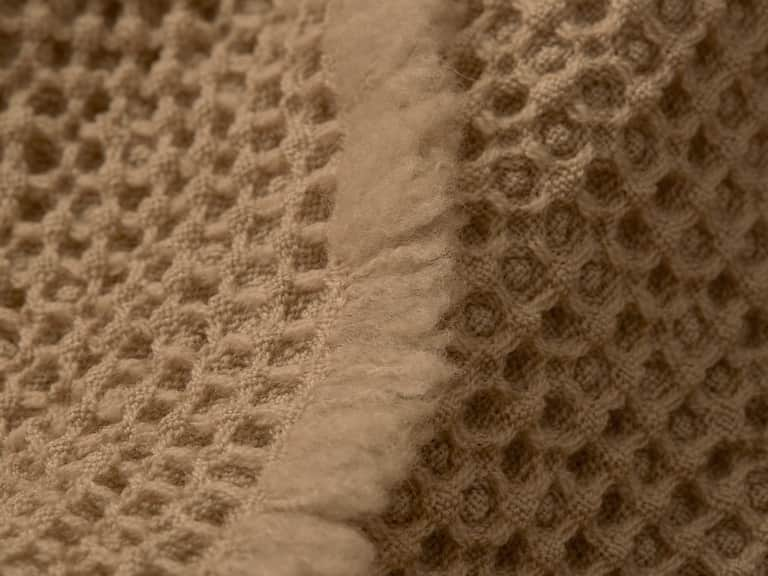
This distinction matters because a wool blanket and a wool-filled comforter are not interchangeable just because both contain wool. One is a fabric layer; the other has an interior fill and a shell. A textured, single-layer wool blanket can be a useful comparison for understanding wool’s surface and seasonal character, but it does not tell you how a filled comforter will perform.
For example, the Nid Blanket is described as pure wool in a three-dimensional waffle weave, with a compact, elastic feel and a weight of 300 g/m². Those details describe a wool blanket’s construction, not a comforter’s fill. It is a helpful reminder to distinguish fiber content from bedding format when comparing products.
How to assess care before you buy
Care is not a footnote with wool; it is part of the selection. Some wool-filled comforters may require professional cleaning, while others may carry instructions for spot cleaning or a specific home-washing method. Never assume that a washable wool blanket and a wool comforter can be cleaned in the same way. Fill, shell, stitching, and size all affect what is appropriate.
Read the care label before purchase and make sure its instructions fit your household. A king-size comforter may not fit comfortably in a domestic washing machine, even if the label permits machine washing. Agitation, heat, and unsuitable detergents can damage wool fibers or alter the dimensions of a textile. When in doubt, follow the manufacturer’s care guidance rather than experimenting with a generic wool routine.
Between cleanings, regular airing can help refresh bedding. Follow the maker’s advice about sunlight and drying; prolonged direct exposure can affect some fibers and colors. If a spill occurs, deal with it promptly according to the care label, blotting rather than rubbing where appropriate. Avoid storing a comforter while it is damp, since trapped moisture can create an unpleasant odor or damage the textile.
A calm routine for long-term maintenance
Wool bedding often benefits from gentle handling. Use a duvet cover if the comforter is designed for one, wash that cover regularly, and inspect the comforter periodically for shifted fill, loose seams, or stains. Follow any instructions about rotating or shaking the comforter; a light shake may help it settle, but vigorous handling is not a substitute for the care directions.
For seasonal storage, start with a clean, completely dry comforter. Choose a breathable storage method when the maker recommends it, and keep the bedding in a dry location away from pests. Avoid compressing it for long periods unless the manufacturer specifically says that compression is suitable. When it returns to the bed, allow it to air before use if it has been stored for a while.
Wool is an animal fiber, and moths can damage wool textiles. Store the comforter in a clean, sealed container or bag if that is consistent with the manufacturer’s instructions, and check stored bedding from time to time. A storage plan is especially useful if you rotate between a lighter summer setup and a warmer winter one.
A practical comparison checklist
Before choosing among wool comforters, set aside the most evocative language and compare the specifications. The goal is not to make the decision clinical; it is to ensure that the promise of comfort is supported by details you can actually use.
- Fill composition: Identify the wool type and whether the fill is blended with other fibers.
- Fill amount: Compare weight or fill density when provided, while remembering that numbers alone do not define warmth.
- Shell fabric: Check the material and consider whether you will use a duvet cover.
- Construction: Look for information on quilting, channels, compartments, or other methods used to distribute fill.
- Size: Compare comforter dimensions with your mattress and duvet cover.
- Warmth description: Treat seasonal labels as guidance, then account for your room, sheets, and personal comfort.
- Care: Confirm whether cleaning is practical for the item’s size and your routine.
- Sourcing and certifications: Read the precise claim and check which materials or production stages it covers.
Questions worth asking
If a product page leaves important details unclear, ask the maker or retailer for clarification. Useful questions are specific: What is the exact fill composition? Is the listed weight for the entire comforter or per unit of area? Is the shell included in that weight? Can the comforter be machine washed, and what size machine is required? Is it intended for use with a cover? What are its finished dimensions?
Answers to these questions can help you compare bedding on substance rather than on adjectives alone. They can also reveal whether a comforter is a sensible match for your care habits. A beautifully described textile may still be the wrong choice if its cleaning requirements are impractical or its size does not suit your bed.
Finding the right wool layer
Wool comforters can bring a particular balance of insulation and moisture management to a sleep setup, but the experience is shaped by more than the name of the fiber. Fill type and quantity, the shell, construction, room climate, and personal preference all matter. Care is equally consequential: the most appealing material is only a good everyday choice if you can maintain it correctly.
Begin with your own habits. Do you sleep warm or cool? Do you prefer a lofty, cocooning bed or a lighter, neatly layered one? Are you comfortable following specialist care instructions? Once those answers are clear, compare the specifications and choose a comforter whose construction, warmth guidance, and upkeep make sense for your life.
The best bedding decision is rarely the one with the most grand claims. It is the one whose materials and maintenance are easy to understand, whose warmth suits the room and the sleeper, and whose construction feels right night after night. With wool, a careful reading of the label is not merely practical; it is the first step toward a more considered kind of comfort.