Bedding • A practical guide
Comforter Warmth Decoded: How Fill and Construction Shape Sleep
A comforter’s warmth is not simply a matter of how lofty it looks. Fiber, fill weight, quilting, fabric and the room around you all influence how a bed feels after dark. Understand those details, and choosing a comforter becomes less guesswork than an exercise in thoughtful layering.
A comforter can appear cloudlike and still feel surprisingly light. Another, with a lower profile, may hold warmth with a quiet, steady efficiency. That contrast is the first useful lesson in bedding: loft is visible, but warmth is the result of several features working together.
Fill traps air, construction helps keep that fill in place, and the outer fabric affects how the comforter drapes and breathes. Add the temperature of the bedroom, the layers beneath and above it, and the sleeper’s own preferences, and the answer becomes personal. There is no universally perfect comforter—only a combination that suits a particular bed, season and way of sleeping.
This guide explains common comforter fills, the difference between fill weight and loft, and how construction changes the feel of a bed. It also considers seasonal warmth options, care needs and the role of blankets in a flexible bedding system.
Start with the language of warmth
Comforter descriptions often use terms such as fill power, fill weight, loft, warmth level and construction. They are related, but they do not mean the same thing. Reading them separately can make a product description much easier to interpret.
- Fill is the material inside the comforter: down, a down alternative, wool, cotton or another fiber.
- Fill weight is the amount of filling used, commonly described as a weight. It can help with comparisons when products use the same material and measurement method.
- Loft describes the fill’s volume or puffiness. Loft can contribute to warmth by creating space to hold air, but it is not a complete measure of warmth.
- Fill power is a measurement used for down that describes how much space a given weight of down occupies under a defined test. It speaks to loft, not to the entire comforter’s warmth on its own.
- Construction describes how the comforter is assembled, including the way filling is held in place and how the shell is sewn.
A label or specification should be read as a collection of clues, not a single verdict. A lofty fill may be efficient for its weight, while a heavier fill may create a more substantial hand. The comforter’s dimensions, shell, stitching and intended warmth level also matter. If a brand offers a warmth guide, use it as a starting point, then consider your room and habits.
Common comforter fills, considered
Fill changes more than insulation. It influences weight, drape, resilience, care and the way a comforter feels when drawn up around the shoulders. The categories below are broad; actual performance varies by fiber quality, processing, fill amount and construction.
Down
Down is the soft undercoating of waterfowl, used in comforters for its ability to create lofty clusters that trap air. A down comforter can offer warmth without the sensation of a dense blanket, especially when its fill has good loft. Fill power can help describe that loft, but does not tell the whole story: the quantity of down, the pattern of the compartments, shell fabric and overall design contribute to the final feel.
Down can suit sleepers seeking a light, lofty layer, but it is important to check care guidance and sourcing information. Some comforters are washable; others call for professional cleaning. A duvet cover can help protect the insert between washes, although it does not replace the care instructions.
Down alternative and synthetic fill
Synthetic fills are designed to provide cushioning and insulation without down. They can be a practical choice for people who prefer a non-down material or want care options that may be more straightforward; however, washability varies by product. Synthetic comforters range from airy to substantial, so the phrase “down alternative” alone does not indicate a particular warmth level.
Look at the stated warmth category, dimensions, fill details and care label. If machine washing is important, verify the full instructions—including drying—and consider whether your washer and dryer can accommodate the comforter’s size.
Wool
Wool is valued for its spring, texture and insulating character. In a comforter, wool fill may feel more structured than a very lofty down insert, depending on its form and amount. Wool can also be used in blankets rather than comforter inserts, adding warmth as a separate layer that is easy to remove.
Care deserves particular attention. Wool products may require gentle laundering, spot cleaning or dry cleaning, depending on how they are made. Check the manufacturer’s guidance rather than assuming all wool bedding can be washed the same way.
Cotton and plant-based fills
Cotton fill often produces a flatter, more familiar feel than highly lofted down. The result may be a comforter with a little more weight and less puff, though construction and fill quantity make a difference. Plant-based fills can vary widely in density, softness and care requirements. Read the material composition closely: a fiber name is a useful beginning, not a complete forecast of comfort.
Why loft alone is not a warmth rating
Loft is seductive. A full, generous comforter promises a certain cinematic coziness, the kind of bed that seems to invite an early night. But a high profile does not automatically mean a warmer sleep. It may reflect the fill’s ability to expand, the way the compartments are sewn, or simply the way the comforter has been shaken and arranged.
Warmth depends in part on how much still air the fill holds close to the body, but the complete system matters. A comforter with a lofty, efficient fill may provide considerable insulation without feeling heavy. A less lofty comforter may rely on more material to create a warmer, weightier layer. Neither description alone establishes how warm it will feel to a particular sleeper.
Fill weight can be illuminating when comparing similar comforters made with the same kind of fill, but it is not a universal scale. A given weight of one material cannot be directly interpreted as equivalent to the same weight of another. If specifications do not make the comparison clear, favor the maker’s stated warmth category and ask how it is intended to be used.
There is also the matter of drape. A comforter that settles closely around the body may feel different from one that stays airy and lifted. Shell fabric, quilting and dimensions can all influence that impression. Warmth is not only a number; it is an experience shaped by contact, movement and the temperature of the room.
Construction: the architecture beneath the cover
The design inside a comforter is easy to overlook because it disappears beneath the duvet cover. Yet construction determines how filling is distributed and how the insert behaves over time.
Baffle-box construction
In a baffle-box comforter, narrow fabric walls separate the top and bottom shell layers, forming three-dimensional compartments. These walls allow the fill room to loft within each box and can help reduce cold areas associated with a completely flat seam. The exact result depends on the size and arrangement of the boxes, the filling and the workmanship.
Baffle boxes often suit fills that benefit from space to expand. A well-designed compartment should keep the filling distributed rather than allowing it to collect in a corner. Still, no construction can compensate for a fill amount or warmth level that does not suit the sleeper.
Sewn-through construction
In sewn-through construction, the top and bottom layers are stitched directly together. This creates defined channels or squares and holds the fill in place, giving the comforter a flatter, more tailored profile. Because the stitching connects the two sides, the comforter’s warmth can vary at those seams compared with the filled areas. This may be a deliberate choice in a lighter-weight design, where a neat, low-bulk silhouette is part of the appeal.
For example, the Avalon 600 Hypodown Duvet Insert is described as using sewn-through box construction to keep its fill evenly distributed. Its listed summer, lightweight and midweight options illustrate an important point: construction and warmth selection are distinct decisions. The stitch pattern manages the fill; the chosen warmth option helps determine the intended level of insulation.
Channels and quilting
Long channels create an elongated pattern, while smaller quilted sections make a more compact grid. Each approach can help limit shifting, but the comforter’s behavior depends on its complete design. A product may feel smoother or more structured in one construction than another, and the pattern can affect how evenly the fill sits across the bed. When comparing comforters, consider the description alongside the stated warmth and care rather than treating the stitch pattern as a warmth ranking.
Build a bedding system, not a single solution
A bed can be adjusted more easily when warmth comes from several considered layers rather than one exceptionally heavy comforter. Begin with sheets and a comforter suited to the room’s usual conditions. Add a light blanket if you want an adaptable reserve, then remove or fold it back when the night feels warmer than expected.
Seasonal options can be useful for households that experience noticeable temperature changes. A summer-weight comforter may be enough in a warm room, while a midweight choice may serve as a year-round foundation in a more moderate climate. In colder months, a lighter comforter paired with an additional blanket can offer flexibility: the added layer can be taken away without changing the entire bed.
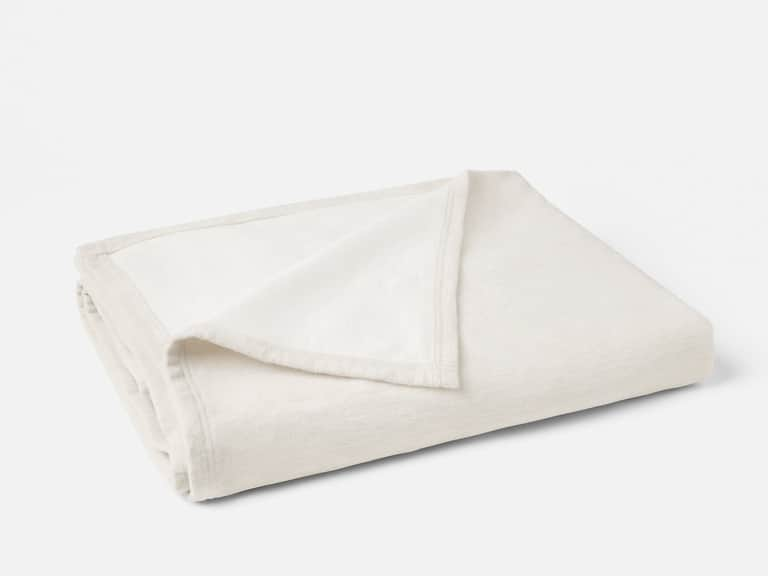
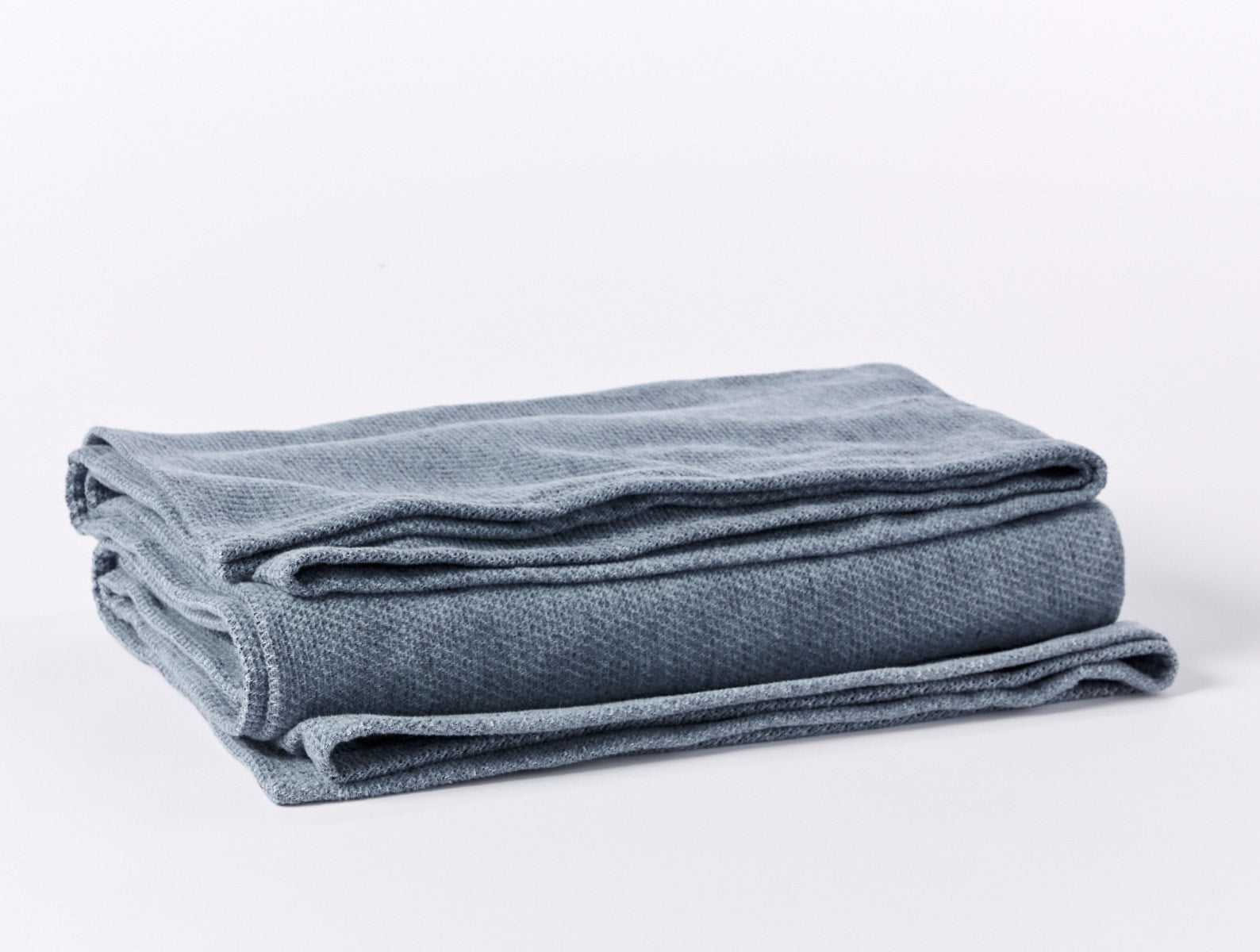
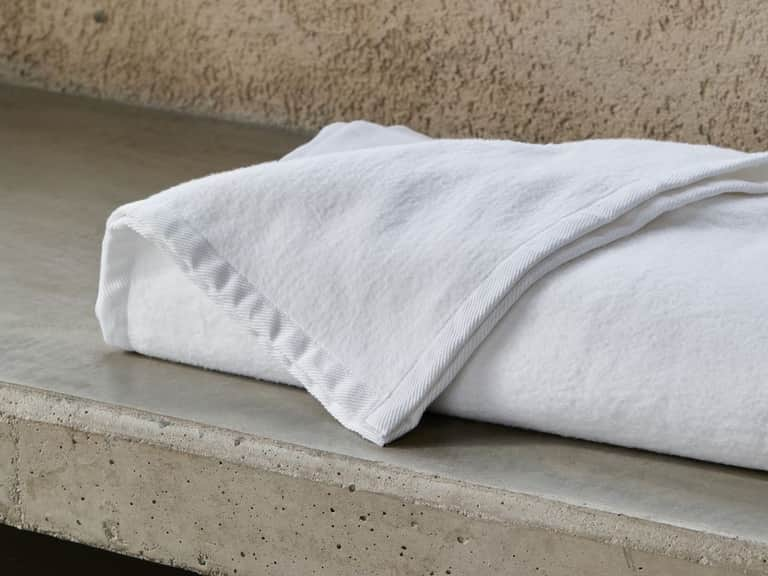
Natural-fiber blankets are one way to create that adaptable top layer. The Sequoia Washable Organic Cotton and Wool Blanket, for instance, combines 70% organic cotton with 30% organic wool and is described as a versatile layer throughout the year. It is a blanket, not a comforter, but that distinction is useful: a blanket can supplement a comforter when needed and be folded aside when it is not.
For a lighter, breathable layer, a cotton blanket can also add texture without turning the bed into a fixed, all-or-nothing arrangement. The Bovi Finnley Cotton Blanket is described as a lightweight, breathable cotton layer intended for year-round use. Think of such pieces as tools for fine-tuning comfort, not as a substitute for choosing an appropriate comforter.
The room and the sleeper belong in the equation
Before choosing a warmth level, consider the room itself. A bedroom that remains warm through the night may call for a lighter comforter than a cool, draft-prone space. Heating schedules, window exposure, climate and the number of layers already on the bed all change the picture. If the room varies from night to night, a modular system may be more comfortable than relying on one heavy layer.
Personal preference is equally important. Some sleepers like the sensation of a substantial cover; others prefer a light drape and room to move. People sharing a bed may have different comfort needs. Separate blankets or a flexible combination of layers can sometimes make the arrangement easier to adjust without requiring a single compromise comforter.
Give a new setup time to evaluate, but make changes methodically. If you feel too warm, remove a layer before replacing the comforter entirely. If the bed feels cool, consider whether the issue is the comforter’s warmth, its coverage or the room temperature. A comforter that does not cover the mattress adequately may allow cool air at the edges, even when its fill is substantial.
Care is part of the comforter’s character
Care instructions are not fine print to be consulted after a spill. They are part of the choice. A comforter that requires professional cleaning may be entirely suitable if that routine works for your household; one that can be laundered at home may be more practical for frequent use. Neither is automatically better. The right answer is the one you can maintain.
Check the label for washing temperature, cycle, detergent guidance, drying method and any restrictions. Oversized bedding can be difficult to wash evenly in a machine that is too small, and incomplete drying may affect the comforter’s feel. Follow the manufacturer’s instructions, and do not infer that a fill is washable simply because a duvet cover is.
A duvet cover can reduce direct contact with the insert and make routine laundering more convenient. Shake and air the comforter according to its care guidance, and store it in a clean, dry place when it is out of season. For fills that need special attention, keep the care information accessible so the comforter can be refreshed without guesswork.
A considered checklist before choosing
When comparing comforters, move past the photograph and ask a few practical questions:
- What is the fill, and how is it described?
- Is a warmth level given, and does it suit the room and season?
- Are fill weight or fill power included, and are they being used in a way that allows a meaningful comparison?
- How is the comforter constructed, and how does that design hold the fill in place?
- Does the size provide enough coverage for the bed and the way it is shared?
- What are the washing, drying and storage requirements?
- Would a lighter comforter paired with a removable blanket offer more flexibility?
These questions help make product descriptions more useful without pretending every specification tells the whole story. If a warmth scale is provided, note whether it is the maker’s own system and compare products within that framework. When information is missing, seek clarification rather than using loft or a fiber name as a stand-in for a complete answer.
The final measure: how the bed feels
Comforter warmth is a study in balance. Fill determines the material’s possibilities; fill weight and loft suggest how it may insulate; construction organizes the filling; and the shell, room and surrounding layers complete the experience. No single feature carries the entire decision.
Choose for the nights you actually have, not for an abstract ideal of the perfect bed. A warm bedroom, a cool climate, a preference for a featherlight cover or a desire for a more enveloping feel may each call for a different combination. Seasonal warmth options make it easier to adapt, while blankets provide a graceful way to add or subtract insulation without remaking the bed from the beginning.
Once fill and construction are understood, the comforter becomes less mysterious. The most satisfying choice is not necessarily the loftiest or the heaviest, but the one that brings the room, the season and the sleeper into quiet accord.
Frequently asked questions
Does a higher-loft comforter always feel warmer?
No. Loft describes volume, not the comforter’s complete warmth. Fill type and quantity, construction, shell fabric and the bedroom environment all matter.
Is fill weight the same as fill power?
No. Fill weight refers to the amount of filling, while fill power is a down measurement related to the space a given weight occupies under a defined test. Neither one alone describes the entire comforter’s warmth.
What is a good way to adjust bedding between seasons?
Use a comforter with a warmth level suited to your room, then add a removable blanket when extra insulation is useful. This makes the bed easier to adapt than relying on one fixed, heavy layer.
Should comforter care determine the choice?
It should be part of it. Compare the care instructions with your household’s routine and equipment, and follow the product label rather than assuming that similar-looking fills can be cleaned in the same way.