Nursery textile guide
Nursery Blanket Basics: Breathable Fabrics, Washing, and Safe Sleep
A nursery blanket can be a tender companion during a cuddle, a practical layer for supervised awake time, and a textile that asks for frequent, thoughtful care. The essential distinction is when and where it is used: loose blankets do not belong in an infant’s sleep space. Learn how fiber, weave, laundering, and age-appropriate use shape a more comfortable and considered routine.
Published October 9, 2026
There is an instinctive appeal to a soft blanket in a nursery. It brings color and texture to a room, offers warmth during a parent’s embrace, and can become part of the familiar rituals of feeding, reading, or quiet play. But a nursery blanket is not simply a smaller version of an adult throw. Its purpose depends on context, and for infants, that context matters especially at sleep time.
Fabric choice and everyday care deserve attention, but they cannot make loose bedding appropriate for an infant’s sleep space. Current safe-sleep guidance from recognized health authorities recommends placing babies on their backs on a firm, flat, level sleep surface with only a fitted sheet, keeping blankets and other loose items out of the sleep area. A beautiful weave, breathable fiber, or lightweight feel does not change that guidance.
This guide looks at the practical basics: what people mean by breathable cotton, how textured fabrics such as waffle weave are constructed, how to wash a frequently used baby blanket, and how to distinguish supervised awake-time use from infant sleep. The aim is not to turn a comforting textile into a source of anxiety. It is to make its role clear, so softness and safety can coexist.
Start with the setting, not the blanket
Before considering fiber or finish, ask where the blanket will be used. An adult holding a baby during a supervised cuddle is a different setting from a crib, bassinet, or other infant sleep space. A blanket can be used as a layer over an adult’s lap, for a supervised floor activity, or as a stroller accessory when an adult is attentive and the child’s face and breathing remain unobstructed. It should be removed before a baby is placed down to sleep.
For every sleep, place an infant on their back in a separate, uncluttered sleep space designed for that purpose. Keep loose blankets, quilts, pillows, comforters, soft toys, and other soft objects out of the crib or bassinet. Do not use a blanket to cover a sleeping baby, tuck one around the mattress, or attach one to the sleep space. Swaddling and wearable sleep garments are separate topics: families should follow current guidance, product instructions, and advice from their pediatric clinician, particularly as a baby grows and begins to show signs of rolling.
Caregivers may hear that a breathable material makes loose bedding suitable for sleep. That is not a safe assumption. Fiber and weave affect the feel and performance of a fabric, but they do not remove the risks associated with loose bedding. For individual questions—especially if a baby was born prematurely or has a medical condition—ask a pediatric health professional for guidance tailored to the child.
What “breathable cotton” means
Cotton is a plant-based fiber used in many nursery textiles. It can feel soft against the skin, takes dye readily, and is available in a wide range of constructions, from smooth plain weaves to raised chenille and open, textured fabrics. The word “breathable” is often used to describe a textile that allows air and moisture to move through it more readily than a denser or less permeable fabric. In practice, performance depends on more than the fiber name: yarn size, weave or knit, finishing, density, and fabric weight all contribute.
That makes “cotton” a useful starting point, not a complete specification. Two cotton blankets may feel entirely different. A lightweight, open construction may feel airy in the hand, while a dense, brushed surface may feel more substantial and cozy. Neither description should be interpreted as a medical promise or as a reason to use loose bedding during infant sleep.
Organic cotton refers to how the cotton is grown and processed under a particular certification standard; it does not mean a blanket is inherently safer for sleep or suitable for every baby’s skin. Certifications can help a reader understand aspects of a product’s sourcing or chemical-processing standards, but they do not replace careful use, laundering, or safe-sleep practices. If a baby has known skin sensitivities, follow a clinician’s advice and pay attention to how the fabric and detergent affect the child.
Texture and construction: from waffle to chenille
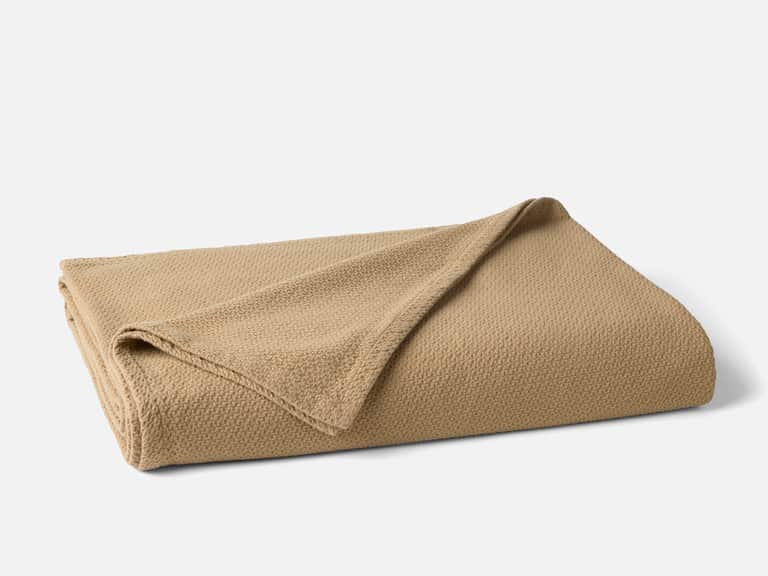
A weave is the way yarns cross or interlace to form a fabric. Waffle weave is recognizable by its small raised cells and recessed squares, which create a three-dimensional surface. Depending on yarn, density, and finishing, that texture can make a blanket feel light and pleasantly tactile. The recessed areas and raised ridges also give the cloth a distinct appearance that suits simple nursery bedding without relying on a print.
Waffle texture is not a safety feature in itself. It does not make a loose blanket suitable for an infant’s crib. Rather, it is one example of how construction influences the hand, drape, and appearance of a textile. For supervised awake-time use, a waffle baby blanket may offer a light layer and a textured surface; the adult remains responsible for keeping the baby’s face clear and monitoring comfort.
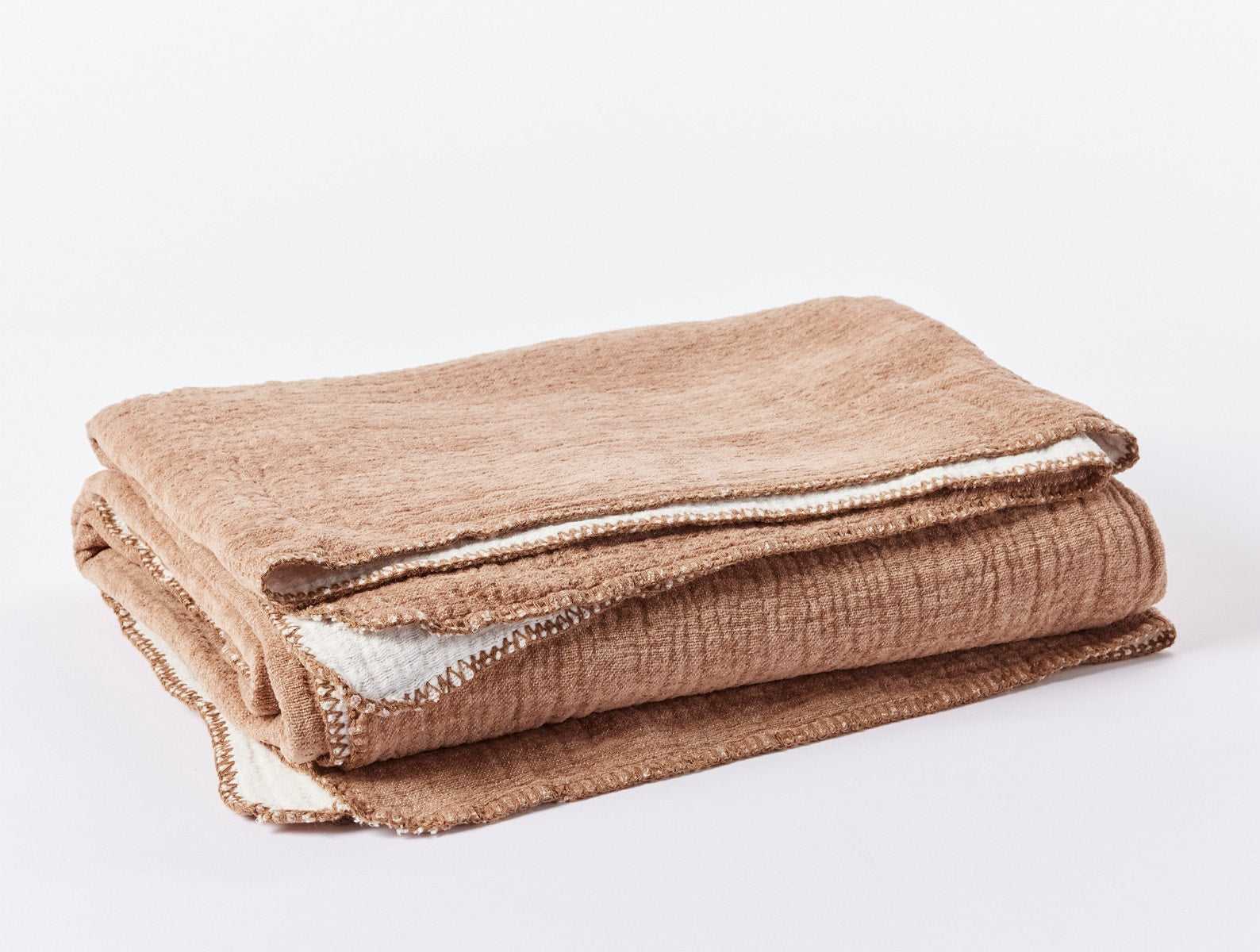
Other cotton constructions have their own qualities. A plain-weave blanket may be smooth and straightforward to launder. Chenille uses a soft, raised yarn that can create a plush surface. Matelassé is a patterned construction with a quilted or dimensional look, though the effect can be made through weaving rather than a separate layer of batting. A brushed finish raises fine fibers at the surface for a softer hand. Each detail affects touch and care, but none changes safe-sleep recommendations.
When assessing a baby blanket, consider its size, weight, edge finishing, and construction alongside the label. A secure hem can help a textile withstand regular washing; loose threads, unraveling seams, or damaged trim are reasons to stop using it until repaired or replaced. For any awake-time use, choose a blanket that can be handled easily, and keep it away from the baby’s face and from equipment where it could become caught or entangled.
Choosing nursery blankets with care
A calm, useful nursery collection does not need to be extensive. A small number of washable textiles often serves daily routines better than a crowded drawer of special-care pieces. When comparing nursery blankets, read the fiber content and washing instructions, check whether the fabric is woven or knitted, and note any warnings or age guidance supplied by the maker.
- Check fiber content. Look for a clear description rather than relying on broad words such as “natural,” “soft,” or “breathable.”
- Consider laundering. Babies’ textiles are exposed to spills and frequent washing, so easy, repeatable care can be more practical than a delicate finish that requires special handling.
- Inspect construction. Examine hems, stitching, and surface texture for loose threads or parts that could detach.
- Understand certifications. Treat certifications as information about defined standards, not as a substitute for supervision or safe-sleep guidance.
- Match the use. A decorative bed layer, an adult’s lap blanket, and a textile used during supervised play have different practical roles. None should become loose bedding in an infant’s sleep space.
A product example that illustrates several of these textile details is the Naturepedic Organic Cotton Waffle Baby Blanket. Its product information describes organic cotton, a textured waffle construction, and machine washing. Those details can help explain fiber and care, but they do not change the central rule: use any blanket only in an appropriate, supervised awake-time setting, not as loose bedding for an infant’s sleep.
A simple, careful approach to washing
Routine laundering keeps frequently used textiles fresh, but the most reliable instructions are the care label and the manufacturer’s guidance. “Cotton” does not automatically mean every item should be washed in the same way. A raised weave, color treatment, trim, or special finishing may call for a specific temperature or drying method. When the label gives instructions, follow them rather than applying a general rule.
As a practical routine, separate items by color when needed, use the recommended water temperature, and choose a detergent suitable for the household and the child’s needs. Use the amount specified on the detergent packaging; extra detergent is not necessarily more effective and can be difficult to rinse away. If a baby has eczema, a diagnosed allergy, or recurring irritation, ask a health professional about suitable laundry products rather than relying on marketing claims.
For a washable cotton blanket, a gentle cycle and low-heat drying are common care directions, but they are not universal. A Naturepedic Organic Cotton Waffle Baby Blanket, for example, is described with instructions to machine wash warm and tumble dry low, with no ironing or bleach. Other cotton blankets may call for cold water, a gentle cycle, or washing dark colors separately. The item’s own label should take precedence.
A few habits help preserve texture and shape:
- Close any fasteners on other laundry items that might snag the weave.
- Avoid bleach unless the care instructions specifically permit it.
- Do not assume fabric softener is suitable; some makers advise against it because it can affect a fabric’s feel or performance.
- Shake out the blanket after washing and dry it as directed, without excessive heat.
- Check seams and edges after laundering, especially if the item is used often.
If a blanket becomes stained, treat the mark according to the fabric’s care instructions and the detergent label. Avoid mixing cleaning chemicals or using harsh treatments that are not approved for the textile. Promptly wash items soiled with milk, food, or other bodily fluids, and make sure they are fully dry before putting them away. Clean textiles should be stored in a dry place, away from dampness that can encourage musty odors or mildew.
Supervised awake time: useful, with clear boundaries
During awake time, a blanket may be part of a supervised routine: a layer over an adult’s knees while holding a baby, a soft surface for a brief floor activity, or a cover for warmth during an outing when used according to the equipment’s instructions. The adult should remain present and attentive, keeping fabric clear of the baby’s nose and mouth. If the baby becomes drowsy, transfer them to a separate, appropriate sleep space rather than allowing them to continue sleeping on or under loose bedding.
Never use a blanket in a way that obstructs a stroller, car seat, carrier, or other product’s harness or airflow. Follow the equipment manufacturer’s guidance. A loose cover placed over a stroller can affect visibility and airflow, while padding beneath or behind a car-seat harness may interfere with fit. In a vehicle, use the car seat according to its instructions and current child passenger safety guidance; blankets should not be positioned in a way that compromises a correctly secured harness.
Supervision is not a substitute for safe placement. If an adult needs to step away, remove the blanket from the baby’s reach and place the child in a safe location. A textile that is appropriate for an adult-supervised cuddle is not automatically appropriate for unattended use.
Infant sleep: keep the space uncluttered
The clearest nursery-blanket rule is also the simplest: do not place a loose blanket in an infant’s sleep space. This applies even when the blanket is thin, lightweight, organic, or described as breathable. For naps and nighttime sleep, use a firm, flat, level surface with a fitted sheet and keep the sleep area free of loose bedding and soft objects. Place the baby on their back for every sleep, following current recommendations from authoritative health sources.
Room temperature and clothing are better addressed through suitable sleepwear and a comfortable environment, not by adding a loose blanket. Avoid overbundling, and check the baby for signs of overheating such as a hot chest or flushed skin. Hands and feet may feel cooler than the body, so they are not the only guide to comfort. For concerns about temperature, clothing layers, or a baby’s health, consult a pediatric clinician.
Safe-sleep recommendations can be updated as evidence and guidance evolve. Families should consult current advice from organizations such as the American Academy of Pediatrics and their local public health authority. Advice from a clinician who knows the baby is especially important when a child has specific medical or developmental needs.
When to retire or replace a blanket
Frequent washing can reveal wear that is easy to miss at first. Retire a blanket from baby use if it has unraveling seams, long loose threads, holes, detached decorations, or damaged edging. Even during supervised awake time, fabric should not be allowed to trail near a baby’s face or become caught in surrounding equipment. Repairing an item may be possible, but it should remain out of use until the repair is secure and the textile is in good condition.
It can also be useful to keep baby blankets separate from the textiles used in a crib. Store a clean blanket for supervised cuddles in a convenient drawer or basket, away from the sleep surface. This small household habit reinforces the difference between a comforting accessory and sleep bedding—and makes it easier for every caregiver to follow the same routine.
A considered nursery, one useful layer at a time
The best nursery textile is not defined by the most elaborate finish or the most reassuring adjective. It is one whose materials are clearly described, whose care instructions fit everyday life, and whose use is appropriate to the moment. Cotton, organic cotton, waffle weave, and chenille each offer distinct textures and care considerations. Reading the label helps you understand those differences; supervision and safe-sleep guidance determine when the blanket belongs near the baby.
Keep the routine uncomplicated: use a nursery blanket for supervised awake-time comfort, launder it according to its care label, inspect it as it wears, and leave loose blankets out of an infant’s sleep space. These habits allow the softness of a familiar textile to remain part of family life without blurring an important safety boundary.
Frequently asked questions
Are breathable cotton blankets safe for infant sleep?
No loose blanket should be placed in an infant’s sleep space, including one made from cotton or described as breathable. Follow current safe-sleep guidance and use only the recommended sleep surface and fitted sheet.
Can I use a baby blanket during supervised awake time?
A blanket may be used in an appropriate awake-time setting while an attentive adult is present. Keep it away from the baby’s face, follow the instructions for any stroller or other equipment, and move a drowsy baby to a safe sleep space.
How often should a nursery blanket be washed?
There is no single schedule for every household or textile. Wash a blanket when it is soiled and as needed for cleanliness, following the care label. Frequent use may mean frequent laundering, so choose and care for fabrics with that reality in mind.
Does organic cotton mean a blanket is hypoallergenic?
Not necessarily. Organic describes a production standard, while skin reactions can depend on many factors, including the textile’s construction, dyes, detergent, and the individual child. Ask a health professional about persistent irritation or suspected allergy.
What makes waffle fabric different?
Waffle fabric has a raised, grid-like texture formed through its construction. It can feel distinctive and may be relatively light depending on the yarn and weave, but the texture does not make a blanket suitable for infant sleep.
This article offers general educational information and is not a substitute for medical advice. For the latest safe-sleep recommendations or questions about an individual infant, consult a pediatric health professional and current guidance from recognized public health organizations.